
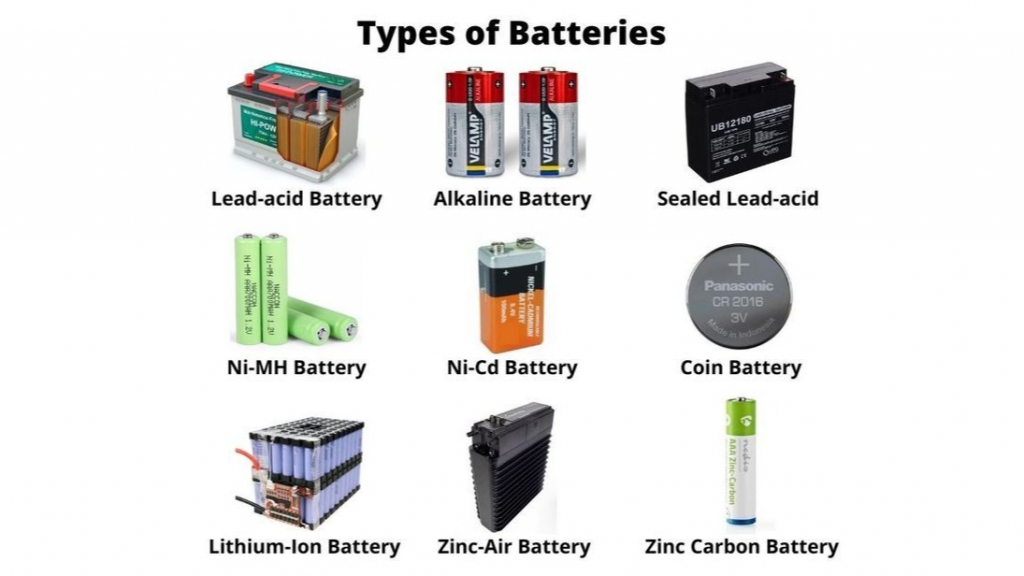

From mobile phones to electric vehicles, inverters to industrial backup systems—batteries are everywhere. But not all batteries are the same. Each type has unique chemistry, performance, cost, and use-case characteristics.
In this blog, we explore the different types of batteries, their advantages, disadvantages, and where they are most commonly used.
⚡ Broad Classification of Batteries
Batteries can be broadly categorized into two main types:
1. Primary Batteries (Non-Rechargeable)
-
Used once and discarded
-
Ideal for low-drain devices
-
Commonly used in: remotes, clocks, flashlights
2. Secondary Batteries (Rechargeable)
-
Can be recharged and reused multiple times
-
Used in everything from smartphones to electric vehicles
🔋 Common Types of Batteries
1. Lead-Acid Batteries
✅ Features:
-
Oldest and most widely used rechargeable battery
-
Cost-effective and robust
🔍 Used In:
-
Cars, trucks, inverters, UPS systems, solar power storage
➕ Pros:
-
Reliable
-
Low cost
-
Recyclable
➖ Cons:
-
Heavy
-
Requires maintenance (in flooded types)
-
Shorter cycle life compared to lithium
2. Lithium-Ion (Li-ion) Batteries
✅ Features:
-
High energy density
-
Lightweight and compact
-
Widely used in electronics and EVs
🔍 Used In:
-
Smartphones, laptops, electric vehicles, drones, power banks
➕ Pros:
-
Long cycle life
-
Fast charging
-
Low self-discharge
➖ Cons:
-
Higher cost
-
Needs battery management systems (BMS) for safety
3. Lithium Iron Phosphate (LiFePO4)
✅ Features:
-
A subtype of lithium-ion with improved thermal stability
-
Safer and longer-lasting
🔍 Used In:
-
Solar systems, e-rickshaws, electric two-wheelers, power walls
➕ Pros:
-
Excellent safety profile
-
Long life (2000–5000 cycles)
-
Stable in high temperatures
➖ Cons:
-
Lower energy density than traditional Li-ion
-
Slightly larger in size
4. Nickel-Metal Hydride (NiMH)
✅ Features:
-
Rechargeable battery with moderate energy density
-
Once popular for cameras and early hybrid vehicles
🔍 Used In:
-
Hybrid cars (like Toyota Prius), older electronics
➕ Pros:
-
Safer than lithium-ion
-
Environmentally friendlier than nickel-cadmium
➖ Cons:
-
High self-discharge
-
Heat buildup during charging
5. Nickel-Cadmium (NiCd)
✅ Features:
-
Durable and tolerant to abuse
-
Rarely used today due to toxicity
🔍 Used In:
-
Power tools, medical equipment (older models)
➕ Pros:
-
Long shelf life
-
Performs well in cold conditions
➖ Cons:
-
Contains toxic cadmium
-
Memory effect reduces capacity over time
6. Zinc-Carbon & Alkaline Batteries
✅ Features:
-
Non-rechargeable (primary batteries)
-
Common for household use
🔍 Used In:
-
Toys, remotes, clocks, flashlights
➕ Pros:
-
Inexpensive
-
Widely available
➖ Cons:
-
Single-use only
-
Low energy capacity
7. Solid-State Batteries (Emerging Technology)
✅ Features:
-
Uses solid electrolyte instead of liquid
-
Safer and more energy-dense
🔍 Used In:
-
Currently in R&D and premium EV prototypes
➕ Pros:
-
Higher energy density
-
Non-flammable
-
Longer life cycle
➖ Cons:
-
Expensive
-
Not yet commercially widespread
🎯 Choosing the Right Battery
| Application | Recommended Battery Type |
|---|---|
| Automotive (ICE vehicles) | Lead-Acid |
| Electric Vehicles (EVs) | Lithium-Ion or LiFePO4 |
| Home Inverter/UPS | Lead-Acid (Tubular or SMF) |
| Solar Energy Storage | LiFePO4 or Tubular Lead-Acid |
| Mobiles/Laptops | Lithium-Ion |
| Toys/Remotes | Alkaline or Zinc-Carbon |
| Industrial Equipment | LiFePO4 or Lead-Acid |
🌿 Battery Sustainability: Reuse & Recycling
Regardless of the type, all batteries need responsible handling at end-of-life. Many materials inside batteries—like lead, cobalt, and lithium—can be recovered through proper recycling.
💡 Partner with a certified battery recycling service to reduce environmental impact.
🔧 Need Help Choosing or Maintaining a Battery?
At Battri.in, we offer:
-
Expert consultation for battery selection
-
Installation and maintenance services
-
Battery repacking, regeneration, and safe recycling
-
Genuine products from top brands
📞 Call us or visit battri.in to explore the best battery solutions for your needs.
🧾 Conclusion
Understanding the different types of batteries is the first step to making informed choices for your home, vehicle, or business. Whether you need power for a drone, solar setup, or electric scooter—there’s a battery tailored for that job.
Choose smart. Power responsibly.

Comments